

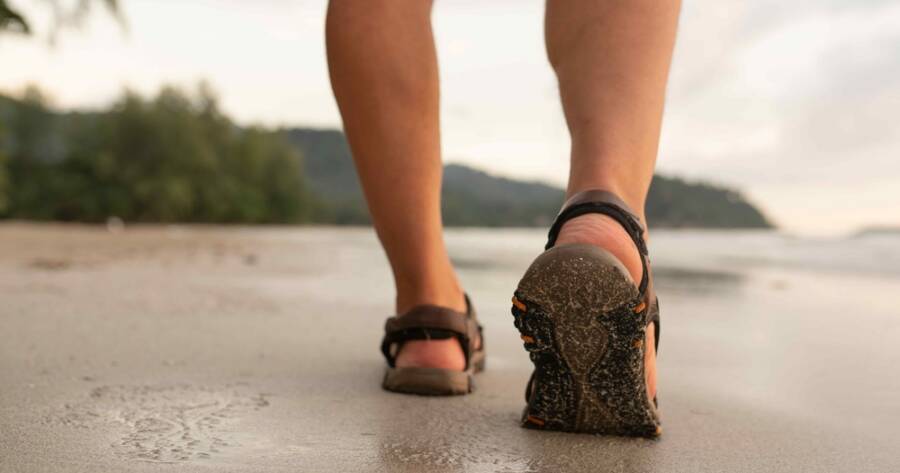
Walking sandals need to do more than look good with summer clothes. A strong pair should soften each step, grip sidewalks and trails, dry well after wet use, and hold up through repeat wear. The best choice depends on where you walk most, how much foot support you need, and whether you prefer open straps or more coverage. Understand the most durable walking sandals that can handle travel days, errands, parks, light hikes, and warm-weather routines.
Teva Hurricane XLT2: Best Simple Walking Sandal for Everyday Use
The Teva Hurricane XLT2 is a good fit for walkers who want a lighter sandal with adjustable straps and a trail-ready sole. It has a padded heel strap, a modern sole made for better traction, and recycled polyester webbing straps. The design is simple enough for casual walks, but it has more structure than a basic flip-flop.
This sandal works well for people who want one pair for sidewalks, parks, campgrounds, and travel days. It does not offer the closed-toe protection of a hybrid sandal, so it may not be the best pick for rocky paths or rough terrain. Still, it is one of the more practical choices for people who want comfort, grip, and easy packing.
Pros
- Adjustable straps help improve fit.
- Heel padding can reduce rubbing.
- The sole is built for better traction.
- Simple design works for travel and daily wear.
Cons
- Open toe leaves less protection on rough paths.
- Strap fit may take a little adjusting.
- Not as cushioned as bulkier trail sandals.
Chaco Z/Cloud: Best Supportive Sandal for Long Days
The Chaco Z/Cloud is a strong choice for walkers who want more underfoot support. It is built with an added layer of cushioning, supportive soles, and adjustable straps. That mix can make it useful for long walks, theme parks, travel days, and casual outdoor use.
The Z/Cloud is not the softest sandal in a plush-slipper sense. It feels more structured, which some walkers like and others may need time to get used to. It is best for people who want a firmer platform, secure straps, and a sandal that feels steady underfoot.
Pros
- Added cushioning helps with all-day wear.
- Adjustable straps allow a more secure fit.
- Supportive sole works well for longer walks.
- Strong option for travel and outdoor use.
Cons
- Firmer feel may not suit every walker.
- Strap system can take time to dial in.
- The open design offers limited toe protection.
KEEN Newport H2: Best Closed-Toe Sandal for Protection
The KEEN Newport H2 is a better fit for people who want a sandal with more coverage. It is a hybrid water and hiking sandal with a closed toe and secure upper. This makes it useful for rocky beaches, river walks, light trails, campgrounds, and trips where toe protection matters.
The tradeoff is bulk. The Newport H2 feels more like a sandal-shoe hybrid than a slim walking sandal. That can be helpful for protection, but it may feel too heavy or warm for people who want an airy sandal for city walking.
Pros
- Closed toe adds protection.
- Hybrid design works for wet and dry use.
- Secure fit helps on uneven ground.
- Good choice for active trips and light trails.
Cons
- Bulkier than open-strap sandals.
- Less breathable than minimalist designs.
- May feel too rugged for dressier casual outfits.
HOKA Hopara 2: Best Cushioned Hybrid Sandal for More Coverage
The HOKA Hopara 2 is a strong option for walkers who want cushioning and coverage in one sandal. It has a higher bed of soft cushion and is designed to protect the foot while still allowing a responsive step. This makes it useful for people who want more softness than a classic strap sandal.
The Hopara 2 also makes sense for mixed days that include pavement, packed trails, wet areas, and travel. It covers more of the foot than a traditional sandal, which can help with protection but reduce airflow. It is best for walkers who want a sandal that feels closer to a light trail shoe.
Pros
- More cushioning than many basic sandals.
- Covered design helps protect the foot.
- Good for mixed walking surfaces.
- Works well for active travel.
Cons
- Less open and airy than strap sandals.
- Bulkier look may not appeal to everyone.
- May be more shoe-like than some sandal buyers want.
Bedrock Cairn Evo 3D: Best Minimalist Sandal With Strong Grip
The Bedrock Cairn Evo 3D is a good pick for people who like a lower-profile sandal but still want support for longer walks. It has a sculpted footbed, a secure strap system, and a lightweight Vibram sole. This gives it a more outdoor-ready feel than many flat minimalist sandals.
This sandal is best for walkers who like ground feel and do not want heavy padding. It may not be right for people who need thick cushioning, soft step-in comfort, or a more traditional arch-support feel. For the right person, though, it can handle travel, trails, water days, and casual walking without feeling bulky.
Pros
- Lightweight feel works well for packing.
- Sculpted footbed adds more support than a flat sandal.
- Secure straps help keep the foot in place.
- Vibram sole supports outdoor grip.
Cons
- Minimal cushioning may not suit sore feet.
- Toe-post design may bother some walkers.
- Less protection than closed-toe sandals.
Tread Labs Redway: Best Sandal for Built-In Arch Support
The Tread Labs Redway is a smart choice for walkers who want a sandal with more shaped support. It pairs a breathable knit upper with contoured arch support and traction. That combination makes it useful for people who want a walking sandal that feels more supportive than a flat summer shoe.
This sandal is especially worth considering if ordinary sandals leave your feet tired. The knit upper gives it a different feel from webbing straps, and the arch shape may feel better for people who like a guided foot position. It may not be the best fit for walkers who prefer a loose, barely-there sandal.
Pros
- Contoured arch support helps guide the foot.
- Vibram traction adds grip.
- Knit upper can feel softer than stiff straps.
- Good choice for town-to-trail wear.
Cons
- Arch shape may feel too firm for some users.
- Less open than classic strap sandals.
- Fit may depend heavily on foot shape.
How to Choose the Right Walking Sandal
Start with your main walking surface. For sidewalks, travel, and errands, a lighter open sandal like the Teva Hurricane XLT2 may be enough. For long days with more support, the Chaco Z/Cloud or Tread Labs Redway may feel better. For wet paths, rocky areas, or mixed terrain, the KEEN Newport H2 or HOKA Hopara 2 may offer more protection.
Next, think about cushioning versus ground feel. A sandal with more cushion may feel better on pavement, but it can also feel bulkier. A lower-profile sandal may feel lighter and more natural, but it may not be soft enough for long walks on hard surfaces.
Fit matters as much as features. Straps should hold the foot without rubbing, the heel should not slide too much, and the footbed should match your arch needs. A sandal that looks durable on paper will not work well if it creates hot spots after one mile.
Walk Farther With the Right Balance
The best walking sandal is not the same for every person. Some walkers need cushion first. Others need grip, toe protection, arch support, or a sandal that dries quickly after water use. The right pair should match your real routine, not just the most rugged product on the shelf.
For a simple all-around sandal, start with the Teva Hurricane XLT2. For more support, look at the Chaco Z/Cloud or Tread Labs Redway. For protection, consider the KEEN Newport H2 or HOKA Hopara 2. For a lighter outdoor sandal with grip, the Bedrock Cairn Evo 3D is the better fit. Choose the sandal that solves your biggest walking problem first, then let style come second.